 0
0
 1
1

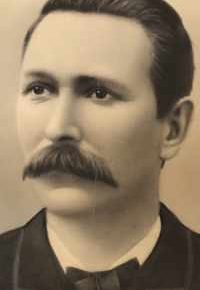
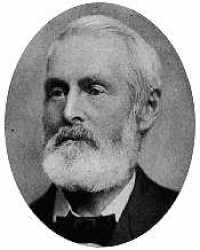
Thomas Atkin, Jr. was born July 7 1833 at Louth, Lincolnshire, England, and was the son of Thomas and Mary Morley Atkin. His parents were well situated as his father was a carpenter and joiner and owned property. His parents had one home in which the family lived and three others which they rented out. Thomas had a sister, Emily, three years older than himself and a brother George, who was three years younger. Three siblings died as babies.
The family was religious even before they joined The Church of Jesus Christ of Latter-day Saints. Thomas’ parents had been Methodists, but his father joined the church in March of 1843. His father diligently taught his wife and family and Thomas Junior was baptized by Elder George Eyers on July 3, 1843. His mother and sister had been baptized the previous day. George was baptized later.
The family decided to join the main body of saints in Nauvoo, but were shocked by the news that the Prophet Joseph Smith and his brother Hyrum had been martyred in June 1844. They postponed their departure plans. After news arrived that the saints were migrating to the Salt Lake Valley, the Atkins made new plans. The family property was sold and the group left Louth for Liverpool and America. At Liverpool they boarded the ship “Zetland, January 28, 1849 setting sail the next day. The voyage was not all calm. The group of saints aboard left singing the songs of Zion, but in a short time most of the passengers were sea sick. The cook house caught on fire and took considerable time to extinguish. By the time the ship reached Grand Cayman Island in the Caribbean the weather was calm and hot, the temperature reaching 117 degrees. The ship arrived in New Orleans on April 2, two months and five days after leaving Liverpool.
The passengers debarked for one day before boarding the steamboat “Iowa”. The steamboat traveled up the Mississippi River to St. Louis where the passengers unloaded again. During a four-day layover the family purchased plows and other supplies then sailed up the Missouri River on the riverboat “Eliza Stuart” to Kanesville, now Council Bluffs, Iowa.
At Kanesville they bought more supplies including wagons and ox-teams, before joining the first company of saints leaving for the Salt Lake Valley in 1849. Orson Spencer was the leader of the company when it started westward on June 6. The Atkin brothers saw their first buffalo in July when they went with hunters a few miles off the trail. Thomas became temporarily lost on his way back to the camp when he didn’t want to wait for the others. Hunters shot several of the animals and brought the meat back to camp.
Thomas and his family arrived in the Salt Lake Valley September 22. The family purchased a city lot of one and one-fourth acres in the Eleventh Ward. A very small abode room was built for his parents and sister, but Thomas and his brother slept in one of their wagons for the fall and winter. The next year, 1850, Thomas was kept busy herding the family cattle south of their city lot. He also helped with the planting and caring for a large garden. He and his brother, George, farmed on shares for a Brother Greenwood who lived near them in the Eleventh Ward.
During the same year Thomas accompanied his father to Tooele Valley where Thomas, Sr. purchased a 40 acre farm. The two started building a house for the family who would soon join them. They planned to farm and raise live stock.
In 1852 young Thomas was ordained a Teacher and set apart to visit the Saints with other brethren. A fort was constructed in Tooele the following year to protect the residents from unfriendly Indians. The Indians still caused problems and that, along with a drought and grasshoppers eating their crops, made surviving very difficult in the Tooele Valley. Some of the people resorted to eating wild roots and herbs that grew in the nearby mountains and prairies to sustain life until a meager harvest was made.
Thomas Junior was 23 when he married 17 year old Mary Ann Maughan on May 20, 1856. She was the daughter of Peter and Ruth Harrison Maughan. Her father later pioneered Cache Valley. Her mother had died in England when Mary Ann was only two. The same day May 20, his brother, George, was married to Sarah Matilda Utley. Fifteen days later, on June 4, the two brothers and their brides and the Atkin parents journeyed to the Endowment House in Salt Lake City to obtain their endowments and the couples sealed to each another.
When the call came in late 1857, for men to defend the church against Johnston’s army, Thomas and other Tooele men responded. The Tooele contingent, under the command of Major John Rowberry, was sent to Echo Canyon, October 10. They remained in Echo Canyon until December 1. The men were discharged since the U.S. troops were delayed by snow from entering the valley. However, in the spring of 1858, the church ordered its Salt Lake and Tooele members and some others to Utah County or further south. Thomas and his brother, George, were in one of the cavalry engaged in checking the advance of the army. They also moved their families to Lehi. While in Lehi, Thomas’ first child, Thomas Maughan Atkin, was born June 7, 1858.
Six other children were born to Thomas and Mary Ann after they moved back to Tooele. Life was busy for the Atkins as they raised live stock, farmed, and performed numerous church activities.
In 1865 Thomas was unable to work due to a bladder inflammation and was treated in Salt Lake City but was still in critical condition. He came home but returned to Salt Lake for more treatment but was not helped. One of the men he had known in the Eleventh Ward proposed Thomas be the subject of a prayer circle. He agreed, however, he was not in robust health the rest of his life. He was able to carry out the duties of second counselor to Bishop Norton Tuttle for three years. He was called on October 31, 1880 as bishop of the Tooele Ward and served 24 years. After his release he was named the Tooele Stake patriarch from 1909 until his death.
Thomas was also the clerk and treasurer of Tooele County for some years and held city offices. On April 10, 1882 he was a delegate to a territorial convention at which time a document was composed asking for admission of Utah to statehood. He was a skilled nurseryman and planted many trees and shrubs around Tooele. He died April 18, 1919 in Tooele and is buried in the Tooele City Cemetery.


 Brother Joseph


 Pioneer John