 0
0
 1
1

(1787-1839)
- born 21 March, 1787, Martin Co., NC;
- married Elizabeth Patrick 22 March, 1811, Warren Co., KY;
- died 9 Sept., 1839, between Warsaw & Lima, IL.
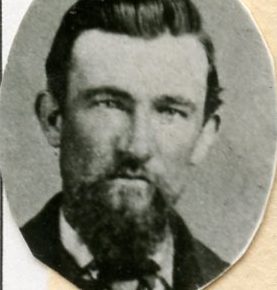
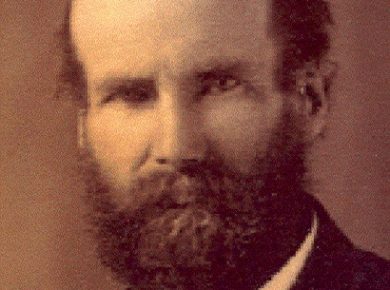
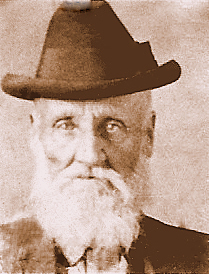
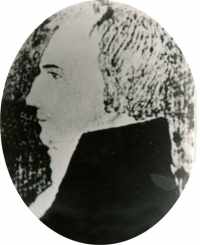
William Taylor, the eldest son of Joseph Taylor, Jr. and Sarah Best, was born 21 March 1787 in Martin County, North Carolina. Because of boundary changes, the Taylor land holdings later became part of Tyrell, then Edgecombe County.
William’s full name may be William Warren Taylor if entries in two separate LDS records are correct. In the Harrisville Ward record Pleasant Green Taylor was baptized by W. W. Taylor, his father; LDS Patriarchal Blessing for John Taylor gives his parents’ names as William Warren Taylor and Elizabeth Patrick.
Raised on the Taylor Plantation near Coneto Creek, William was surrounded with loving parents, grandparents, and several aunts and uncles and cousins. As he grew up, he served as a surveying chain carrier for his father and grandfather on occasion.
William lived in North Carolina until he was 21 years of age, when he left that beautiful state to carve out his destiny in Kentucky. The new home that he and his parents chose was a lovely place, 12 miles north of Bowling Green and just west of Richardsville near the Barren River. Here his parents bought 276 acres of fertile land. Wonderful springs provided a good water supply for the family.
About the same time that the Taylors came to Kentucky, the John Patrick and Sarah Kendrick family also settled there. They had left their home in Halifax County, North Carolina, and prior to that had lived in Mecklenburg County, Virginia. Bringing a large family of 11 children, the Patricks settled about eight miles west of Bowling Green. William Taylor and Elizabeth Patrick met, fell in love, and married on 22 March 1811 in Warren County, probably at the Taylor Family cabin. A Baptist minister named Robert Daugherty, who was related to the Moses Taylor family living near the Caspar River, crossed that river to perform the marriage ceremony. No relationship between those two Taylor families has been found to date.
According to Warren County Court records, William had important responsibilities in Warren County concerning the roads. A farmer, he worked hard for his wife and family. He and Elizabeth raised 11 children near Richardsville from 1812 until 1830. In 1830 or 1831 William and Elizabeth decided to leave Warren County, Kentucky, and move to Missouri. This must have been a difficult decision for them because of family circumstances. William’s father had passed away on 22 March 1818, leaving his mother still living in the cabin he had built, with a faithful slave Jake to help care for her. To leave meant that William probably would never see his mother again. Elizabeth, too, had lost her father, John Patrick, in November 1816 and probably wondered if she would ever see her mother again. Contemplating a move of over 250 miles, both must have wondered if they would ever see other members of their family circle they would leave behind.
William and Elizabeth made the difficult journey to eastern Missouri and settled in Monroe County in 1830 or 1831. Their son Pleasant Green later described that area in his autobiography as follows:
“This part of Missouri at that time was a wilderness, inhabited by the Red man, and numerous wild animals abounded here. It was a beautiful country, consisting of prairie and timber land. William had a home consisting of 640 acres of very valuable land.”
Ludson Green Patrick, one of Elizabeth’s brothers, had preceded them into Missouri, where he obtained a grant of land, described as ”Half of Lot #1. Township 55 Range 10 West, dated 31 July 1831. Levi Turner, Elizabeth’s brother-in-law, obtained the other half of Lot #1 on 19 October 1831. After their arrival, William and Elizabeth obtained the east half of the North West Quarter of Section 22 Township 54 Range 8 West, on 3 November 1831.
Thus the three Patrick/Taylor families coming from Warren County, Kentucky, were all established in Monroe County, Missouri during the year 1831. William and Elizabeth Taylor sold their 1831 grant to John F. Grigsby on 3 April 1832. They then obtained three other land grants, the first dated 9 May 1832, described as “the East Quarter of Section #4, Township No. 53, Range 8 West.” The second one adjoining the previous two, was obtained 23 April 1834.
William Taylor, a strong man, standing over six feet tall, was purported to be very pronounced in his views as a Democrat. Well acquainted with the Bible, he and Elizabeth taught their children to love that book and its teachings.
After the Church of Jesus Christ of Latter-day Saints was organized 6 April 1830 in the state of New York, its members encountered opposition and persecution wherever they went in search of peace and safety.
Evidently some missionaries of the L.D.S. Church found the William Taylor family in Monroe County sometime in 1832–probably springtime. William thought he was the first person to be baptized into the Church in the State of Missouri. Baptized after hearing only one sermon, he was soon ordained an Elder and became an earnest expounder of the doctrines of the Church. He became a member of the Salt River Branch, also known as the Bowling Green Branch which was organized in that area.
Meanwhile a group of Latter-Day Saints had settled in Western Missouri–in Jackson County. Commanded to live the Law of Consecration and to purchase the land for an inheritance, they were soon plagued by the spirit of speculation and feelings of disunity. Failing to heed the counsel of authority, they soon aroused the hostility of the older settlers there, which led to mobbings and severe persecution. Concerned for their welfare, the Prophet Joseph Smith organized a group of men, Zion’s Camp, to march from Ohio to give them aid.
Zion’s Camp, traveling westward toward Jackson County, arrived at the Salt River Settlement 7 June 1834. Next day, Sunday, after meetings had been held, Hyrum Smith and Lyman Wight arrived with additional volunteers. At the Salt River Branch Zion’s Camp reached its maximum strength, 207 men. Remaining at the settlement until the following Thursday, the Camp was engaged in repairing wagons and harnesses, also refreshing and reorganizing the men. When they left on June 12th, they had been joined by two of William and Elizabeth’s sons-in-law, Robert McCord and Isaac Allred, as well as Isaac’s father James. Family tradition also indicates that son John Taylor also joined the party. Robert McCord died 24 June 1834 in Clay County, Missouri, of the cholera.
After reaching Jackson County, Missouri, the Camp disbanded, part of them remaining in Missouri, while the rest made their way back to Kirtland, Ohio, in small groups.
William and Elizabeth settled next on the Fishing River in Ray County, Missouri. There William bought two good farms. Remaining there until the fall of 1834, they encountered such bitter persecution that they and other Saints in the area had to leave their homes once again. William received nothing for his land; he was also robbed of $500 in cash, 75 head of hogs, and considerable other property.
William’s family next moved to Long Creek, eight miles south of Far West in Clay County. There William bought 320 acres of land in October 1835. The family remained in this location until the spring of 1839. By 1837 three more children had been added to the Taylor family circle, making a total of 14–seven sons and seven daughters. All members of the family witnessed the laying of the cornerstone of the temple at Far West. They also moved into this city late in the fall of 1838, where they were compelled to camp in the streets. So many Saints had gathered there to escape mob violence that shelter could not be obtained. Arriving at night, they made their beds upon the ground. Snow fell during the night to the depth of ten inches, covering beds, clothing, shoes and stockings, as they lay spread upon the ground.
They saw the Prophet Joseph surrender himself to the mob, and they heard the dreadful confusion made by the mob the following night. Elizabeth Taylor prepared food and carried it to the brethren who were held as prisoners in the Liberty Jail.
After the surrender of the city, the Taylors returned to their home, a distance of eight miles. There they found that about 7,000 of the mob had camped for two nights at or near their place, turning their horses into the Taylor’s cornfield. The mob ate or destroyed about 300 bushels of potatoes, 75 geese, 100 chickens, several head of cattle, 40 head of hogs, 20 stands of bees; too, they had burned about one mile of rail fence in their campfires.
On 8 February 1839 they again moved from their home, leaving 1000 bushels of corn in a crib, for which they received an old neck yoke, valued at $2.50. They received nothing for their farm and improvements. Together with other faithful Saints, they were expelled from their homes and from the State of Missouri by order of Governor Boggs.
Their journey took them over 150 miles, across the Mississippi River, and into Illinois. Much of the time the weather was very cold and stormy. Consequently, the roads were muddy and miserable.
Along their route of travel the local residents were unkind, often turning the hungry from their doors. Pleasant Green Taylor later recalled that once on that journey, he watched a poor woman carrying a child in her arms. When the woman stopped at a house by the roadside to ask for a morsel of bread for herself and the child, the man called her a “damned Mormon” and ordered her to leave, giving her nothing to eat.
Pleasant Green related another incident which portrays the Christ-like nature of his father. When an aged couple named Singleton lost their only horse on the exodus, they were powerless to move their wagon beyond the reach of the mob. William Taylor unhitched one of his best horses and hitched it to the old gentleman’s wagon and told the couple to take the horse and go in peace. So much for the blessings that come during adversity when willing hearts are in tune with the Spirit!
While en route to their destination in Illinois, William became ill and died 9 September 1839 (probably from typhoid fever). Buried beside the main road, his grave was five miles from Lima and eight miles from Warsaw, Illinois. The burial was made on land belonging to Col. Levi Williams, a bitter enemy of the Church. A few years later this Col. Williams boasted of having helped to kill the Prophet, and he threatened to dig up the body of William Taylor and give it to the hogs. Elizabeth called on her sons to gather some logs or poles, make a fence around the grave and insure that the body was not disturbed.
A short time before his death, William called his children to his bedside and counseled them to rally around the priesthood and the main body of the church. He also secured a promise from each of them that they would not marry outside of the Church.
Throughout his life, William was industrious, progressive and resourceful. He had a strong will, but was humble and God-fearing. He had great faith and courage to withstand wealth or poverty, whichever was his lot. When he decided to join the Church, his relatives pleaded with him not to join; however, he had the courage of his convictions; he was baptized. He lost all he owned of worldly goods, but he had the wisdom to recognize that these could not compare with the riches of eternity. Like the saints of old, he did not shrink from giving his life for the right cause. His death was brought on by the hardship endured through the forced journey and from the persecutions and mobbing of lawless Missourians. All these trials weakened him so the resulting disease could destroy his life.
The above biography is based upon the one prepared by Shari Humpheries Franke in her book. Family History of the Joseph Taylor, Jr. and Sarah Best Family, currently under revision for the second edition (1998). Used with her permission.
While research was in progress to determine, if possible, the location of William Taylor’s grave in Illinois, our cousin James Calvin Taylor, a man of action, determined that more cousins would be able to find a memorial to William if it were located in the Old Nauvoo City Cemetery (where more tourists visit). Accordingly, he purchased two lots there and at his own expense erected a lovely memorial to our William Taylor and Elizabeth Patrick. Cal’s son Craig had been interested in this project, also. After Craig was killed in a tragic plane crash at Malad, Idaho on 15 Jan 1996, his name was included on the memorial. How deeply we appreciate the generosity and good judgment of Cal and his companion!
Elizabeth was with the first group of saints to travel to Winter Quarters in 1846. She drove her own ox team with her large family. She had to remain there to gain strength and resources for a time, then continued on to Utah, where she arrived in May, 1849.
This entire article was taken from “The Joseph Taylor, Sr. Family Association” pub 10/10/04, www.taylorassociation.org. Pictures inserted by LaRon Taylor.
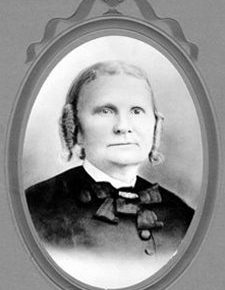
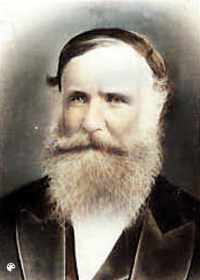
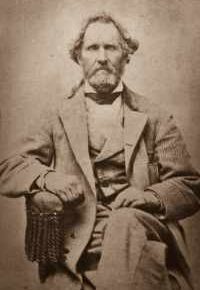
[1] Photos of William and Elizabeth obtained from DUP in Salt Lake City, Utah, May, 2007


 Brother Joseph