HURST, Philip: Letter on Indian affairs in Sanpete County to the Salt Lake Herald

If government wants to know if there has been any Indian trouble here, let men be sent here to inquire; talk to the widows of Jens Larsen and David Jones, the widowed mothers of Thomas Jones and Nathan Stewart; visit the graves of the entire Given family; talk to the men who have rode night and day for hundreds of miles, trying to bring these marauders to Justice;
0 1
Read Time:3 Minute, 35 Second
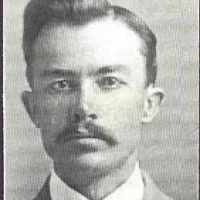
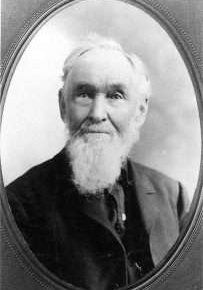
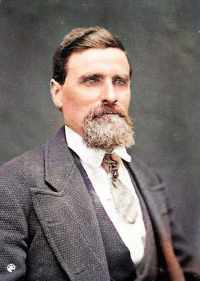
Philip Hurst
(1836-1901)

Philip Hurst wrote to the “Salt Lake Herald” concerning Indian affairs in Sanpete County.  It was published on 1  January 1873.

Indian Matters in Sanpete, A Little History – Fairview, Utah – December 15, 1872

(Published on January 1, 1873)

Occasionally I read accounts of Indian Affairs some of which express a doubt whether there has been any trouble here with Indians or not.  From our chief magistrate in his message (he) uses the words “real or imaginary” in speaking of Indian troubles in this region.  If my evidence is of any value, I should like to tell a few facts connected with the history of this settlement since the spring of 1865.  The Indians then opened the ball by killing Jens Larsen, our shepherd.  The next morning they killed the Givan Family of six persons, and then drove off a large herd of cattle and horses belonging to this place and Mt. Pleasant.  During the same summer they killed David Jones.  To protect ourselves and stock, we hired eight men to act as scouts, and four men to herd cattle.

In the spring of l866 the Indians killed Thomas Jones and wounded William Avery.  It was thought best for our settlement to move our women and children to Mount Pleasant; and while they were there, we built a stone fort here.  We then moved our families back, and fed our cattle in the corrals from the first of August until the Spring of l867.  We then hired 10 mounted men to herd our cattle and protect the settlement.  In the spring and summer of l868 the Indians stole a number of workhorses and mules.  Two men went in pursuit.  In a few days they returned, bringing part of the stock back, reporting they overtook the Indians going up a steep mountain, and that the thieves fled, taking the swiftest horses with them.

In the fall of 1869 the Indians stole a small band of horses from a field, close to town.  The same summer they took a span of horses from a party that were out service-berry picking.  In l870 the Indians shot at two men and then drove off a band of colts before the citizens could rally after the report was given.   In l871 we had no trouble with Indians, except to satisfy their begging propensities.   In the spring of l872 the Indians came in large numbers.  They were arrogant and domineering, but we got along with them the best we could.  Indian agent Dodge told them to go back to their reservation, and for us not to feed them anymore.  This made them mad, and many of them were determined to kill whites and steal horses.  Just in the heat of haying, they killed Nathan Stewart, wounding Peter Larsen, and Martin, the boy, while fetching the cow herd home.  After this we hired six mounted men to herd the cows, and broke up the Cooperative stock herd in Thistle Valley.

General Morrow and troops came to our assistance and furnished us protection while we were harvesting our crops.  They were warmly welcomed by the people; who now thought that Uncle Sam would hold a protecting hand over his nephews in Sanpete, but the white tents were struck, and the troops were marched back.  Why, we could not learn, as the Indians were stealing whenever they could get a chance.  If government wants to know if there has been any Indian trouble here, let men be sent here to inquire; talk to the widows of Jens Larsen and David Jones, the widowed mothers of Thomas Jones and Nathan Stewart; visit the graves of the entire Given family; talk to the men who have rode night and day for hundreds of miles, trying to bring these marauders to Justice; ask the amount of taxes paid for protection; and see the men who have had their only team taken more than once.  And this is only one settlement’s story.  Other settlements could tell a similar tale; differing in detail; and when I read expressions from high officials which seem to doubt our troubles, I ask myself, am I awake or is the last eight years experience the imagination of a fevered brain?

Happy
Happy
0 %
Sad
Sad
0 %
Excited
Excited
0 %
Sleepy
Sleepy
0 %
Angry
Angry
100 %
Surprise
Surprise
0 %
You May Also Like

YEARSLEY Sr., David Dutton: Giving His All

The Yearsleys made their way through the bitter cold winter weather to Winter Quarters. The hardships were so extreme that some entire families were buried along the way. “Thus, from day to day, slowly and wearily traveling, went the exiled Saints across the undulating surface of snow-covered Iowa. The Roads were very bad, the weather cold and stormy, and the streams, now frozen, now swollen by spring freshets, almost and at times quite impassable. Again and again they were obliged to double teams on the heavily loaded wagons, to drag them through deep streams and miry marshes on their line of travel. Some days three or four miles would be the extent of their journey. Many a halt was made, at times for weeks (5).”
View Post

GLEASON, John Streator: The Martyrdom of the Prophet

“The scene through which I have been called to pass since I arrived in this place from the East has almost alienated me from my country. Almost one continual round of mobocracy by night and by day. When I contemplate the scene it almost makes me shudder, and my blood run cold in my veins. I have been an eye witness to almost the whole scene from the beginning. My life has been exposed—threatened from time to time. . . when they were filled with wrath …. About a week before the assassination of Joseph and Hyrum Smith I was arrested—marched to jail by a band of the desperate and could not even lay there in peace—was aroused about 12 o’clock by a rush of men into the yard and a loud rattleing [sic] and hallooing at the door of the jail. One of our men went down and opened the door, when they rushed up stairs and caroused about a while, and left us.”
View Post

DALTON, Charles Wakeman: A True Pioneer

Exploration in the early 1850 's confirmed the southern half of Utah had the potential to grow cotton, grapes, figs, flax, hemp, rice, sugarcane, tobacco and produce iron ore. In May of 1854 Brigham Young sent a group of missionaries under the leadership of Rufus C. Allen to the South. This company arrived in Pine Valley, about 35 miles Northeast of St. George, Utah on the headwaters of the Santa Clara Creek in early spring. Charles W. Dalton and family was in this company.
View Post

History of Robert Wiley and Sarah Darling Wiley

Later Sarah decided to give up her business in Liverpool and join her family in Utah. Sarah had the means enough for a very comfortable trip across the plains. She had three teams and wagons fixed up for her trip. She brought many nice things from England. For herself she rode in a carriage across the plains.
View Post

ALLPHIN, Israel Dodge

A TURBULENT TIDAL WAVE RAGED THROUGH THE CREEK CHASM DESTROYING EVERYTHING IN ITS PATH. THERE WOULD BE NO ACCOUNTABILITY AS TO WHAT WOULD TAKE PLACE AT THIS TRAGIC MOMENT…A CENTURY LATER, HISTORY BOOKS WOULD CHRONICLE THE EVENTS OF THE JULY 16, 1863 PINE VALLEY FLOOD.
View Post

THOMSON Jr., Moses

Combined with the guarding that was surely required of Moses, we also learn from George Thomson’s biography that “Moses pushed and pulled on a handcart with a sick man in it for many days. Their rations got slimmer . . . When they got to the Sweetwater [River] near Devil’s Gate, Moses died with seven others the same night. . . . they were buried in shallow graves and covered with snow. This tragedy was a terrible blow to George and he did not get over it for years.”
View Post

GASKELL, Elizabeth: A Forgotten Pioneer

Mature, single women who were early converts and emigrants to Utah have received short shrift in Latter-day Saint History.Although the two ill-fated handcart companies of 1856 suffered most of the deaths, several of the wagon companies that were bringing up the rear, including the one in which Elizabeth traveled, were also caught in the early winter storms that swept the barren highlands of Wyoming in October and November.
View Post

JACKSON, Elizabeth Horrocks: Handcart Pioneer of 1856

“It will be readily perceived that under such adverse circumstances I had become despondent. I was six or seven thousand miles from my native land, in a wild, rocky, mountain country, in a destitute condition, the ground covered with snow, the waters covered with ice, and I with three fatherless children with scarcely nothing to protect them from the merciless storms. When I retired to bed that night, being the 27th of October, I had a stunning revelation. In my dream, my husband stood by me and said, 'Cheer up, Elizabeth, deliverance is at hand'. The dream was fulfilled.”
View Post