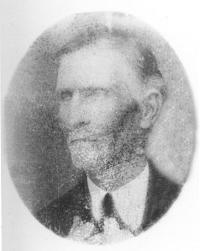
WEEKS, Allen

0 1
Read Time:1 Minute, 35 Second
Submitted by Keith Lawrence

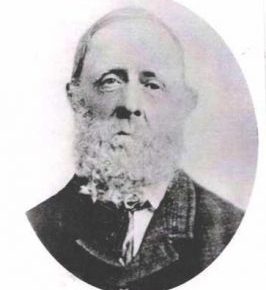
In 1852 the Weeks Company, led by Allen Weeks crossed the plains with 241 Latter-day Saints.  In the company were Allen Weeks’ wife, Sarah Jane Bennett and members of her family, including Sister Weeks’ mother and her younger brother, Eli, and Eli’s new bride, Louisa.

When Allen Weeks was called to settle at Cedar Valley in Utah County, Sarah’s family, which had traveled over the plains in the Weeks Company, accompanied Allen and Sarah.

Sarah’s younger brother Eli Bennett and his wife Louisa May Zufelt were excited to pioneer northwest Utah County because they had been assured “it abounded in fine land, timber, and grass.” Upon arrival in Cedar Valley in November, 1852, Eli and Louisa were profoundly challenged.  Still a couple of weeks away from his twenty-first birthday and his wife barely nineteen, Eli struggled to construct makeshift cabins on wagon beds and to prepare food and shelter for animals before the onset of winter.  In the spring of 1853, the Walker War forced evacuation from Cedar Valley to a temporary site in Lehi where the couple’s first child, Eli Jr., was born in June.  The settlers returned to Cedar Valley later that year.

On August 8, 1854, Allen and Sarah Weeks’ teenage son was murdered while getting a load of wood, apparently by renegade Indians. This event caused Brigham Young to stress greater watchfulness throughout the colonies and to hasten fort building and other protective measures.

The Weeks and Bennett families endured additional challenges, including difficult winters, illness, and failed crops, but eventually established themselves comfortably.  Allen Weeks became the first bishop of the Cedar Valley (later Cedar Fort)  Ward and Eli Bennett would become the third bishop of the Ward in 1882, serving in that position for twenty-four years until his death in October 1906.  What a dedicated commitment to a Church calling!

Happy
Happy
0 %
Sad
Sad
0 %
Excited
Excited
0 %
Sleepy
Sleepy
0 %
Angry
Angry
0 %
Surprise
Surprise
100 %
You May Also Like

ROBERTS, Owen: Welsh Convert

On Friday, May 20th, they started on the railroad for St. Joseph, Missouri where they arrived safely; from thence they proceeded on their way up the Missouri River on the steamboat “St. Mary”. Here they were treated roughly by the crew and others. They had no where to sleep or sit, but were almost constantly compelled to stand on their feet night and day until May 26th where they landed on the banks of the Missouri River below Florence, Nebraska at which place they lodged for a while so they could fit up their teams and baggage to cross the plains to the Rocky Mountains.
View Post

WOOLSEY, Jacob C. & son Joseph H. : 1848 Pioneers

Jacob C. Woolsey is the "brother-in-law who dug Abigail Lee's grave" at the "9th or Last Crossing of the Sweetwater" on 2 Sep 1848. Abigail Schaeffer is the widow of the above Joseph Woolsey and eight of her twelve children joined the Church and came to Utah! She was married to John D. Lee "for her protection and for convenience of traveling."
View Post

JAMESON, Charles: Haun’s Mill Survivor

Charles Jameson was one of the Haun’s Mill victims that survived. “Oh, what a time that was! [Charles Jameson] was shot several [4] times. He crawled into the brush. The men followed him. One said, ‘Shoot him.’ Another said, ‘No, let him suffer. He’s dying anyway.’ But he did not die; he lived to go to Utah and lived to a good old age (6).” They were able to extract one bullet, but Charles carried the other three slugs with him for the rest of his life.
View Post

ALLEN, Albern

A court-martial was held by the officers and priests, and without being heard in their own defense, the brethren were sentenced to be shot on Friday morning on the public square in Far West, in the presence of their wives and families. At this unprecedented action General Doniphan objected, saying he would have nothing to do with such cold-blooded actions, and he would draw off his brigade from the army. This probably saved the lives of the prisoners, as the sentence was changed and the prisoners were taken to Independence, Jackson County (3).”
View Post

ALLRED, Isaac

He promised them that they would not have to shed the blood of their fellowmen, but that this added affliction heaped upon them in this hour of their trials would turn out as a blessing upon their heads. Several of the young Allred boys joined the "Mormon Battalion" and performed with that Battalion in the longest march of foot soldiers in length of miles ever traversed by any army in the history of time.
View Post

YOUNG, John Ray: Experiences

John R's mother was ill and stayed in Winter Quarters, but John R and his brother Franklin W ( 8 ) left soon after the advanced party, in the Jedediah M Grant Company. In his book John R. states that they were no ones responsibility, but everyones chore boys. It is heart renching to me to picture a sick mother sending a 10 year old son on a 1000 mile treck through wild country with an 8 year old in tow. One morning when they were camped on Hams Fork near Ft Bridger, in what is now Wyoming, a cow was sick and would not get up. John was left behind to try to get her up and bring her to the next camp site. It is terrible to think of the fear he felt as the last dust settled from the wagons as they faded from view. While tending the cow he saw an Indian across the river, and he decided to leave the cow and head for camp. The next morning several men returned to the previous camp site, and found that the cow had been butchered by Soux Indians 'on the war path after Shoshones', This band raided Ft Bridger, but left the Mormon train alone except for one sick cow.
View Post

CARLING, John Witt

Wagons for Fleeing SaintsJohn Carling and his son Isaac worked at making and mending wagons for the Saints who were being driven from Nauvoo. The mob violence became so intense that the Carling family decided to leave with the main body of saints. Brigham Young sent Heber C. Kimball to inform John that if he would stay until all of the Saints had been provided with good outfits, not a hair of their heads would be harmed. They remained as requested, though some wives complained that they would all be killed. “The morning they were to leave, they were counseled to get to the ferry boats before the mobs were astir, and upon arriving at the ferry, the captain hurried them onto the boat and admonished them to be quick because they could see the mobs coming. Some were on horses, and others were running, but all with guns in their hands, and they were cursing. As the saints left the shore, they could hear the leader of the mob ordering his men to shoot. But as the men came to the shore, they stood still. It is told by some that two shots were fired but they missed the people in the boat.”
View Post

ALEXANDER, Abel

Their two year old daughter, Edna, received fatal burns when a pot of freshly made tea was upset, scalding her chest. Due to the shock of the accident as well as the severity of the burn, she died on December 17, 1853. They had to use the funds they had saved to pay for the medical care and burial expenses for their little one.
View Post