KARCHNER, William Decatur and Margaret Jan Casteel

0 1
Read Time:4 Minute, 36 Second
This article originally appeared in Vol.50 No.2 (2011) issue of Pioneer Magazine

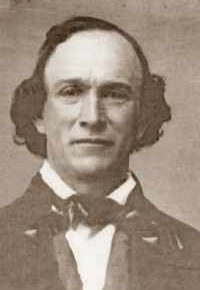
William Decatur Kartchner was born May 4, 1820, in Montgomery Co., Pennsylvania. In 1826 his father, John Christopher Kartchner, died, leaving his mother with five children in poverty. William and his brothers worked hard long hours, early and late, for poor pay and at times did not get enough to eat. William worked in a blacksmith shop, where during the winter he was called up at three in the morning to make fires and call the cook. Work started at daylight and continued until seven p.m. and occasionally all night.

William later went into partnership in Washington Co., Illinois, with his brothers, Peter, as farmer, John, as trader and William, as blacksmith.

On May 7, 1842, William was told of two Mormon elders 10 miles away so he saddled his horse and rode there, having previously read “Voice of Warning” by Parley P. Pratt. William stayed overnight and was baptized the next day, May 8. His brother John met him at the gate on his return and cursed him and the Mormons in such a manner for the next month that William left his brothers and went to Nauvoo, worked on the temple, and was baptized in the river for his father and other deceased relatives.

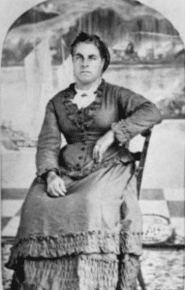
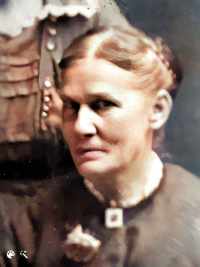
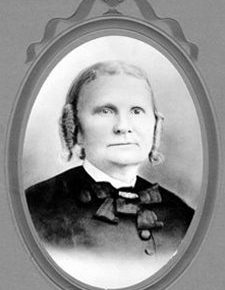
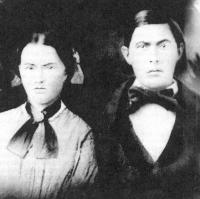
Margaret Jane Casteel was born Sept. 1, 1825, in Copper County, Missouri, to Jacob Israel Casteel and Sarah Nowlin Casteel. Margaret was a woman of fine intellect and sterling character, modest and refined in manner, deeply religious. She was baptized a member of the Church at 14 in Pike Co., Illinois. When she was 18, she married William Decatur Kartchner, on Mar. 17, 1814, in Nauvoo.

William set up a blacksmith shop at his father-in-law’s place. The mob was threatening the settlers and so he stood guard the greater part of the winter, and during a very wet spring he came down with rheumatism. The rheumatism became so severe that it afflicted him the rest of his life.

Margaret and William began their westward journey in September 1844. There was much hardship and short rations of food; rations were reduced to one gill of corn a day.

During the fall of 1845, William crossed the river and went on foot 60 miles to see his brother, John Kartchner. He gave them welcome and a comfortable home. William learned of a pioneer company leaving for the Rocky Mountains in the spring of 1846. His determination to join this company annoyed his brother John, who had made him fine offers of land if he would stay with him for five years. William told John, “I would rather be a Mormon’s dog than to stay in this county, when my people had been robbed, pillaged, murdered and now exterminating orders issued to them to leave the United States.”

William’s camp arrived in the Salt Lake Valley about three days behind Pres. Young’s, reaching the Great Salt Lake Valley July 27, 1847.

They located at a spring about nine miles southwest of the city and began the usual building of the adobe house, fencing and farming the land allotted to them. Their food was very scarce. Their “bread stuff gave out” and so he had to kill his lead ox for food.

In the winter of 1850 a call was made for a group to colonize San Bernardino, California. The Kartchners and the Casteels were among those called to go. The Kartchners remained at San Bernardino until the later part of 1857, when they were called to return to Utah and settled at Beaver, Utah.

William and his family received a call Oct. 9, 1865, to go to the Muddy River. About every six months they moved to a new townsite (the old site washed out when the dams broke), until the winter of 1869 when they moved to Overton and then to Panguitch Mar. 20, 1871. William was called to organize a Sunday School and soon had about one hundred scholars. He set up a mail route connecting Marysvale and Kanab, as well as a post office at Panguitch. In 1874 Joseph A. Young organized a United Order, and William served as secretary and as a board member.

Margaret was always busy raising chickens, spinning, weaving and putting up fruit, both fresh and dried. By this time the family consisted of six sons and five daughters. Two sons and a baby daughter died in infancy.

At General Conference in St. George in 1877, William, his sons and sons-in-law were called on a mission to Arizona Territory, the Little Colorado River settlements. Floods swept away the settlements and the family had to move to the new settlement of Snowflake, Arizona, in 1878.

The family helped to colonize four of the western states. Now Snowflake was to be their permanent home. They took part in the activities of the new settlement, especially in the religious affairs. However, Margaret Jane Kartchner became ill and died on Aug. 11 at 56.

William Decatur Kartchner died May 14, 1892, in Snowflake. He had 21 children—his wife Margaret Jane Casteel had 11, and his wife Elizabeth Gale had 10.

Sources: Autobiography of William Decatur Kartchner, copy on website http://kartchner.surnames.com; family history records; autobiography of Elizabeth Gale Kartchner on same website; “W. D. Kartchner, Man of Steel, True to the Faith”; personal history of Margaret Jane Casteel from The Kartchner Family Book, compiled by Karen H. Miller, 2004.

Happy
Happy
0 %
Sad
Sad
0 %
Excited
Excited
0 %
Sleepy
Sleepy
0 %
Angry
Angry
0 %
Surprise
Surprise
100 %
You May Also Like

BARLOW, James and Ann Crompton

Ann Crompton Barlow was an English Mormon Emigrant, who felt the desire to bring her three youngest children, John (17), Jane (15) & Joseph Smith (7), to the Utah Territory to gather in "Zion" with the Saints. She was a widow, with meager means, thus was chosen to use the Perpetual Emigration Fund by the leaders of the Manchester Branch.
View Post

BLANCHARD, Amelia Jane Davis

The Davis family, being among the first settlers to Cache Valley, suffered untold privations and hardships. Amelia remembered the trials they had with the Indians, and how frightened she was. They would come to the door begging for food and no one dared to turn them away. As Ann H. fixed food for them, the Indians would play with the white children. When coming out of the house with food one day, Ann H. discovered the Indians had exposed her children to the black smallpox. The twins soon came down with the illness. The settlers were all so frightened of the deadly disease that a log shelter was hurriedly built a short distance north of the Logan Cemetery. The Davis family, including the stricken twins, moved there in isolation. Amelia told of rats, mice, and snakes so thick that the healthy children took turns with willows, brushing the snakes from the beds of the sick children. Their beds located on the floor were made with a straw tick. The weather was severe coming through the open cracks of the shelter. The family was badly neglected and almost starved to death. Remarkably, the twins recovered from the smallpox epidemic, but after being home only a short time, diphtheria struck, taking the lives of both twins, Henry and Catherine. Childhood days were very strenuous and hard. These early settlers had lots of troubles, yet they had some thrilling and good times too. Amelia often told stories of the exciting sleigh rides, dances and house parties they enjoyed. How she loved her church activities! Amelia's greatest desire was to do good for others and scatter sunshine wherever she went.
View Post

HOWARD, Mary Ann Tolman

Her two younger sisters died while crossing the plains and they were just 300 miles from Salt Lake City when her mother passed away. Mary Ann, age 12, and Emma, age 10, washed and dressed their mother, wrapping her in sheets ready for burial. This was a very heart rendering experience for these two young girls. They gathered sage brush to cover and conceal the grave so the coyotes wouldn't find it so easily.
View Post

RUCK, Elizabeth Collett

That is the date when Wilford Woodruff was at Leigh (about 9 miles from Redmarley) baptising Thomas and Ann Oakey (Elizabeth’s sister) among others (9 in all) when the dog was thrown in the pool as recorded by Wilford Woodruff himself.
View Post

JENSEN, Jens and Dorthea: Nearly Pioneers

Most pioneer stories involve building religious faith through hardships and challenges, but some early migrants to Utah don’t fit this mold. Some were disappointed by life in Utah and returned to their place of origin. Others moved on seeking greener pastures elsewhere. Still others remained in Utah but became disaffected with the dominant religion. Some became Jack Mormons, others became vocal critics of the LDS Church, and still others joined a different church. Jens Christen Jensen and his wife Dorthea were cases of the latter.
View Post

ASHBY, Nathaniel

The Ashbys were seaman and ship wrights until after the War of 1812. Nathaniel however, was apprenticed to a shoemaker at an early age to learn the shoemaking trade. He became expert in the making of fine shoes and started his own business.
View Post

BELLISON, James Thomas and Louisa

Before many days, an incident occurred which tells a lot about James' attitude toward draft animals. His granddaughter, Pearl Allen Read, tells of the company coming to a bog of mud in the trail which caused many wagons to get stuck. As each team came to the bog, the Captain standing there would join the drivers in whipping the animals to get them through.When it was his turn, James forbade the Captain. "These are my animals and no whip is to be used on them." Although James' team pulled through the bog successfully, the Captain was angry and thereafter continued to find fault with this independent member of his company.James Thomas' life-long insistence that his animals be treated well was admired by those who knew him and was learned and perpetuated by his children throughout their lives.
View Post