0
0
 1
1
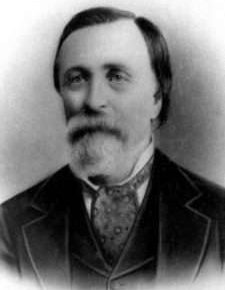
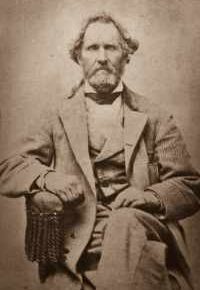
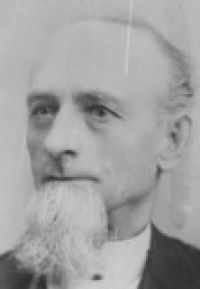
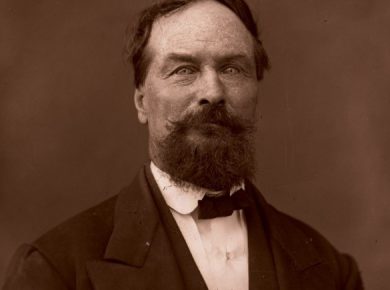
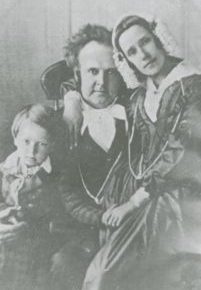
Rasmus Johnson was born September 19, 1813 in Falster, Denmark. He was the son of Jens Larsen and Karen Rasmussen. He had nine brothers and sisters named Lars, Rasmus, Kirsten, Lars, Maren, Ane, Kirstine, Ole, Bodil, and Simon.
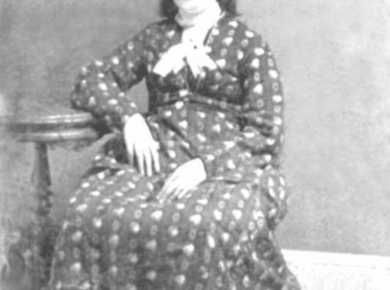
Rasmus had three wives. The name of his first wife is unknown. His second wife was Anna Kistena Peterson. She was born in backable Zealand, Denmark on Apr. 5, 1813. They were Married in 1847. Two daughters were born to them. Kisty Johnson Larson was born 22 Nov., 1848, and Karn Marie Johnson was born Nov. 18, 1850.
Rasmus and Anna received the gospel and were baptized on Feb. 11, 1852. They sold their home and moved to Copenhagen, Denmark, where Anna stayed while Rasmus was on a mission for seven months before they started for America. The company, including Rasmus, Anna, and their two children, left Denmark in December, and reached Fiule, England on Christmas eve, after a very stormy journey on the sea. Then, they went on to Liverpool, England, and then, on their way across the Atlantic Ocean. They were eleven weeks and three days on the ocean, and Rasmus was sick most of the way. Rasmus paid for a family of six to immigrate to America.
They arrived at Salt Lake City, Utah, on Sep. 29, 1853, after a long and tedious journey. Rasmus and Anna had walked across the plains. When they got to Salt Lake City, Ruben Allred was being sent to Springtown to strengthen a small company that was settled there. President Young divided the company, some to go north and others to go south. There was Indian trouble in both areas. The Rasmus Johnson family went to Springtown, Utah. They stayed there a short time, and then went to Manti, Utah a distance of 18 miles. They traveled with an ox team. It was cold, so Anna kept a fire in a “bake kettle” all the time to keep hands and feet from freezing.
In the spring of 1854, some of the men went to Ephraim, Utah to build a fort for protection for their families. The fort covered one and a half acres of ground. When the fort was finished, they built their house against the fort wall, and put on a slant roof. It was Covered with small poles and then with willows and dirt. The next house needed only two walls because it was built against the first house. The fort had a large gate, which was closed, barred and guarded. At first, the stock was kept inside the fort, until a good corral was built. The gate was nearest to the west side because this side was nearest to the creek. Today, a large tree stands by the creek in Rasmussen’s garden where the corral used to stand. It was a good place to watch for Indians. In the winter-time, the Indians traveled across the east mountains.
Rasmus and Anna shared their room in the fort with another family. As soon as the ground could be worked in the spring, the entire family would work together to get the grain in. It was long, hard, slow work. The first spring, an early frost froze the grain, so it could not be used for flour, or for seed. They also raised some potatoes. The next year, in 1855, they had to buy seed grain, and the grasshoppers took that grain crop. So, they had to buy grain for seed and for bread the third time. Rasmus and Niels Peterson were down to one ox each and a half share in a wagon. (Neils had married Mattie’s sister, Maren). They worked together and sold their wagons, oxen, clothes, bedding, and table linen, all for seed and bread stuff. They traveled from Iron County to Logan to get wheat and flour. By now, Rasmus had paid for 8 oxen, 2 cows, and 2 wagons. This next year, the Lord blessed this group with a good harvest. They had not baked bread for a long time. They were told to bake hard biscuits because there was more strength from the hard crust.
More immigrants arrived each year, so they built a large fort that took up twenty acres of ground. This fort was built with a straight road from east to west, and small gates were placed here and there as the construction continued. Small gardens and a large ditch were inside of the fort. They grubbed the sage brush and burned it so they could make lye for soap.
Molasses was made from corn stalks, beets, and parsnips. Fires were started by rubbing bark fine and placing a piece of flint between the fingers, then striking it with a piece of steel. The sparks would fly into the bark and start it to burn. Their coloring was done with oak bark for brown, and sage brush for yellow and green.
Thread was made by parting the wild flax and putting it into a hole for several weeks. Then, it was taken out and scattered around to dry. By using a hammering method, the fibers were used to spin cloth.
In the year 1857, Rasmus Johnson married Mettie Jensen in polygamy, and, while living in the fort in Ephraim, two children were born to them. The 1st one was a daughter, Martha Kistena, born May 19, 1858, and then Rasmus Jr., born Apr 6, 1860. When the Indian trouble was settled, the saints moved out of the fort, and the 3rd child, another girl, was named Matilda Mariah, and was born Feb 6, 1865 in a rock house in Ephraim.
Rasmus Johnson lived an interesting, busy, and industrious life and was known as a good husband and father and friend. He died Jul. 2, 1874 at the age of 61, and was buried in Ephraim, Utah…a long, long way from his native home in Denmark.


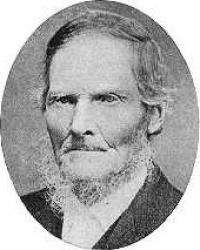
 Brother Joseph