BEESLEY, Ebenezer

0 1
Read Time:2 Minute, 42 Second

This article originally appeared in Vol.50, No.1 (2003) of Pioneer Magazine.

by Janet Peterson

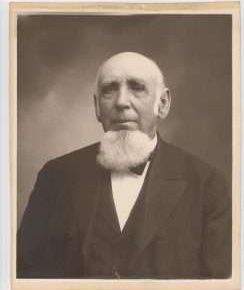
Ebenezer Beesley was born in Bicester, Oxfordshire, England, on December 14, 1840, the fourth child of William Sheppard Beesley and Susannah Edwards Beesley. Young Ebenezer was a musical prodigy. When his parents’ Wesleyan Methodist choir practiced in the Beesley home, six-year-old Ebenezer could sing parts with them. So impressed were they with his musical talent that a group of women wanted to send him to St. George’s Chapel in Windsor to be a choir boy. His parents refused to let him go.1

At about this time, his mother and father joined The Church of Jesus Christ of Latter-day Saints, and Ebenezer himself was baptized on September 22, 1849. Ten years later, Ebenezer married Sarah Hancock in England. The new Beesley family emigrated to Utah in 1859, making the journey via handcart. They settled in Tooele before moving to Salt Lake City; in Salt Lake, they resided in the Nineteenth Ward. Ebenezer and Sarah had ten children. In 1869, he married a plural wife, Annie Buckeridge, by whom he had six children.

Ebenezer was immersed in music. According to Spencer Cornwall, “leading the singing in the Sunday School, revising and preparing music for the Juvenile Instructor, directing the ward choir, studying the violin under Professors C. J. Thomas and George Careless, composing Sunday School music, compiling songbooks for Sunday Schools and Mutual Improvement Associations, later directing the production of the Latter-day Saints, Psalmody, were some of his busy activities.”2

Ebenezer composed music especially for the Sunday School Two of his hymns sung today, “Welcome, Welcome Sabbath Morning” and “We Meet Again in Sabbath School,” affirm the importance of Sunday School. The Deseret Sunday School Union printed music cards before the publication of its Music Book in 1884 so that the Saints could sing the new hymn tunes rather than relying on folk or Christian tunes. Ebenezer’s hymn “Never from Thee” was introduced as Card No. 5. Other hymns of Ebenezer’s appeared in the Tune Book for the Primary Association, the Juvenile instructor, and the Improvement Association Song Book. His hymn tunes were much loved in his day as they still are in our day.

In 1880, Ebenezer was called as conductor of the Tabernacle Choir, which he led for the next nine years. He also played in the Salt Lake Theatre Orchestra and often filled in for George Careless as conductor.

Ebenezer Beesley died on 21 March 1906 in Salt Lake City.

Eleven of Ebenezer Beesley’s hymn compositions appear in Hymns, 1985:

  • “High on the Mountain Top”
  • “What Glorious Scenes Mine Eyes Behold”
  • “The Happy Day at Last Has Come”
  • “God of Our Fathers, We Come unto Thee”
  • “Great is the Lord”
  • “Sing We Now at Parting”
  • “Tis Sweet to Sing the Matchless Love”
  • “Reverently and Meekly Now”
  • “Let Us Oft Speak Kind Words”
  • “Welcome, Welcome, Sabbath Morning”
  • “We Meet Again in Sabbath School”

Notes

  1. Spencer Cornwall, Stories of Our Mormon Hymns (Salt Lake City: Deseret Book, 1975), 106-7.
  2. Cornwall, 107.
  3. “Latter-day Saints’ Psalmody, ” quoted in Karen Lynn Davidson, Our Latter-day Saint Hymns: The Stories and the Messages (Salt Lake City: Deseret Book 1988), 106.
Happy
Happy
0 %
Sad
Sad
0 %
Excited
Excited
0 %
Sleepy
Sleepy
0 %
Angry
Angry
0 %
Surprise
Surprise
100 %
You May Also Like

ALLEN Jr., Daniel: A Life of Consecration

Having completed their assignment, Daniel and his committee returned to Nauvoo, only to find buildings burning, mobs raging, and the saints gone. Daniel hurried to his home to find that his family was still alive, but his wife Mary Ann had just had a new baby and was very ill. He pled with the mob to let him stay a few days so his wife could recover, but they said they would kill them all if they weren’t gone by the next day. They hurriedly loaded what they could in the wagon and made a bed for Mary Ann and the baby. The Allen wagon was one of the last three to leave Nauvoo. They traveled together for a short distance, but couldn’t keep up because of Mary Ann’s grave condition. Being left alone with only one other wagon, they trudged through the mud and snow as best they could until they reached the head of Soap Creek (it looks like this might be less than 100 miles from Nauvoo). Mary Ann had struggled so valiantly, but could endure no more, so she whispered her last words to her loving husband…”We’ll meet again dear love in a better world and I shall wait your coming”. She died on the trail in May, 1846, along Soap Creek, Davis County, Iowa with no one but her family and the angels in heaven to mourn her passing.
View Post

CARLISLE, Richard & Jane Field

Members of the family were baptized at various times in 1849 and 1850. Richard became the Presiding Elder of their branch. In 1851, on the “Good Ship Ellen,” they emigrated to America, except for their oldest son, Thomas, who came a year later. On their way up the Mississippi River, Jane died in St. Louis on 24 June 1851. She had done the washing for a woman afflicted with the dreaded cholera, so common among emigrants on that river. Jane caught the disease and died almost immediately. It must have been very difficult for Richard to manage his large family during the years following Jane’s death. First he had to get the whole family across the Plains, then provide a home for them in a new land. The bereft father and his motherless brood stayed to work in St. Louis during the remainder of the first year. The youngest son, Richard, hired out to a Mormon family and came west with them, the first of his own family to arrive in the Valley. The oldest son, Thomas, had by then joined the rest of the family in St. Louis.
View Post

JOHN, Thomas & Margaret Thomas

The first three nights on the trail were spent on the banks of the Elkhorn River, which was not far out of Winter Quarters. The river had many fish in it and some of the company fished a good deal while camped at that location. Others spent time harvesting grapes which were in abundance along the banks of the river. The company saw many buffalo herds and abundant antelope, deer, and elk along the trail. They only harvested one buffalo, but had many deer and antelope along the way. This journey was made before the white man exterminated the buffalo by shooting thousands and then leaving the carcasses to waste.This was not the end of the influence of the white man. Henry John documented the following: “The horse and the cow were soon to take the place of the buffalo; sheep were to replace the elk, deer and antelope. Domestic fowl claimed the place of the wild turkey; grouse and little prairie dogs were given wheat saturated with poison in order to move them out of the way so fields of grain could be raised. Wild plums and bending branches of wild fruit were to be rooted up and the more luscious fruits- peaches, pears, apples and others- were to take their place. The Indian wigwams were to be moved; white man’s cottages and beautiful residences were to take their places (2).” Henry Miller had a very stern reputation and lived up to that reputation on this journey as well. When the company came to the Green River, Captain Miller told them all to get out of the wagons and ford the stream on foot. The river was ice cold and one old man that had been very sick and worn out climbed on a mess box that was bolted on the back of a wagon. When Captain Miller saw this, he jumped into the river and pulled the old man off and threw him into the cold river. Twenty eight people died on the trip and many thought a good portion of those fatalities were attributable to Captain Miller’s harsh, unforgiving supervision
View Post

GLEASON, John Streator: The Martyrdom of the Prophet

“The scene through which I have been called to pass since I arrived in this place from the East has almost alienated me from my country. Almost one continual round of mobocracy by night and by day. When I contemplate the scene it almost makes me shudder, and my blood run cold in my veins. I have been an eye witness to almost the whole scene from the beginning. My life has been exposed—threatened from time to time. . . when they were filled with wrath …. About a week before the assassination of Joseph and Hyrum Smith I was arrested—marched to jail by a band of the desperate and could not even lay there in peace—was aroused about 12 o’clock by a rush of men into the yard and a loud rattleing [sic] and hallooing at the door of the jail. One of our men went down and opened the door, when they rushed up stairs and caroused about a while, and left us.”
View Post