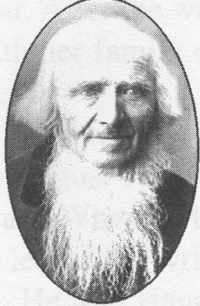
ANDERSON, Hans

They had 37 deaths on this voyage due to an out break of the measles and the stagnant and unfit water. Just 4 days before arriving in America, August 7th, Hans' grandson Carl Fedrick Liljeroth died. The "Emerald Isle" arrived at the New York harbor on August the 11th.
0 1
Read Time:3 Minute, 28 Second

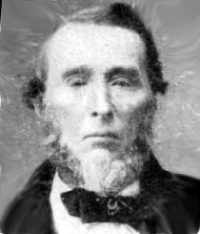
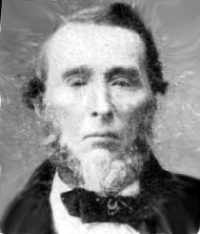
Hans Anderson was born March 3, 1806 in West Odarslov, Odarslov, Malmohus, Sweden to parents Anders Carlsson and Hanna Pehrsson. Hans worked as a laborer during his entire life. At age 31, he married Hanna Jonsson. She was born May 17, 1808, the daughter of Jons Jeppson and Malene Andersdotter. She died a year later of dropsey on November 8, 1838 and was buried November 18, 1838.

After Hanna’s death, Hans met and later married Karna Nilsson on November 15, 1839 at Odarslov, Malmohus, Sweden. She was born Jan.19, 1813 in Getinge, Gardstanga, Malmohus, Sweden, the daughter of Nils Olsson and Hanna Akesson. Hans joined the Church of Jesus Christ of Latter-day Saints on March 26 1864. His wife Karna had joined two months earlier on January 24, 1864. Hans and Karna had six children in Sweden–Andrew born: January 19, 1841, Hannah born: April 10, 1843, Caroline born: April 5, 1845, Hans born 24 Sept 1847, Elna born: January 13, 1850 and Niels born: September 24, 1853. Hans and Elna both died as small children.

Four years later Hans and his wife, daughter Karna and her baby, and his sister-in-law Inger Nilsson and her husband Jons Nilsson decided to emigrate to Utah and join their, family that had emigrated in 1866. They left Copenhagen, Denmark on the 13th of June 1868 along with about 630 other people on board the steamer “Hansia“.

The Hansia

When the ship attempted to leave Copenhagen, the brethren had considerable trouble with the police authorities there. After a successful voyage across the North Sea, Hans and his family and fellow saints arrived in Hull, England on Tuesday June 16th. They boarded a train that same evening for Liverpool. Here the group of emigrants found accommodations in seven different hotels.

Hans and Karna and their family and relatives on the 19th of June boarded the sailing vessel “Emerald Isle” and they were insulted in most every imaginable way. On the 20th this ship sailed from Liverpool carrying a company of 876 people of which 627 were Scandinavians. Elder Hans Jensen was the president with James Smith and John Fagerberg as assistants. They had 37 deaths on this voyage due to an outbreak of the measles and the stagnant and unfit water. Just 4 days before arriving in America, August 7th, Hans’ grandson Carl Fedrick Liljeroth died. The “Emerald Isle” arrived at the New York harbor on August the 11th. The emigrants landed at Castle Garden August 14th and the same day the saints were taken by streamer up the Hudson River a few miles where they found shelter until their baggage could be weighed.

The journey to Zion was resumed by railway on the 17th from New York and they traveled via Niagara, Detroit and Chicago to Council Bluffs where they arrived on the 21st. The following day (August 22nd) they were taken across the Missouri River by a steamboat. Afterwards they traveled by the Union Pacific Railroad to Benton, which was seven hundred. miles west of Omaha arriving there the morning of August 25th.

Hans and family and fellow Saints were met by Church teams which took them to the camp on the Platte River located about six miles from Benton. They were able to rest here for a few days until August 31st when Captain John G. Holman took Hans and his family and Scandinavian Saints by ox-team across the Plains and mountains to Zion. This company arrived in the Great Salt Lake Valley on the 25th of September 1868. Hans and his family went to Millville where they were greeted by his wife’s sisters, Sissa Sorensen/Pehrsson, Elsa Nilsson Jonsson/Nillson, and brother Ake Nilsson. They settled in Millville. Their daughter, Hanna and her husband, and their son Neils, later joined them in Utah.

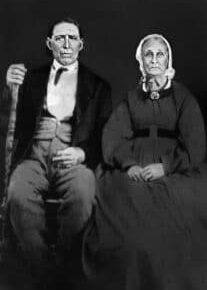
In June 1874, Hans and Karna, and their daughter Hanna, and her husband Ola, made the long trip to Salt Lake City and were sealed by Wilford Woodruff in the Endowment House. Karna died November 30, 1881 and Hans died January 19, 1897 and was buried in the Millville Cemetery.

Happy
Happy
50 %
Sad
Sad
0 %
Excited
Excited
0 %
Sleepy
Sleepy
0 %
Angry
Angry
0 %
Surprise
Surprise
50 %
You May Also Like

TWITCHELL, Ephraim & Phoebe Melissa Knight

One day Branch President Ephraim Twitchell was traveling from Sacramento a long way by wagon. The last day of his journey he was traveling late, after dark. He did not stop because he was almost home. He was alone in his wagon, when suddenly there was a man sitting beside him on the spring seat. He just appeared from nowhere. He told Ephraim that he should take his family from San Juan Bautista and go to San Bernardino. Ephraim responded that they had not been in San Juan very long and that his children had their friends there. He noted that he did not think he could get them to go with him. The man beside him replied, "Yes, you can, and you must go to San Bernardino or you will lose them." When Ephraim turned to answer him he was not there. He had disappeared just as he had appeared -it seemed like just out of thin air. Ephraim knew the gospel very well and remembered their story in the Book of Mormon about the three Nephites. He thought this must be the answer-the messenger was one of the three Nephites. He then saw a beautiful new coat that the messenger had left on the spring-seat beside him. He thought the messenger had really been there-that he had not just imagined or fantasized. Ephraim went home and told his wife, Melissa. They talked about the move. They prayed about it for a couple of days. They knew they must go to San Bernardino, California. Every one of their children and one nephew, John Newton Twitchell, the oldest son of Jasper Twitchell went with them. Anciel Ephraim's oldest son came a year later.
View Post

DAVENPORT, James and Almira Phelps

In this spring of 1847, James Davenport was recruited as a blacksmith for the first company to leave with Brigham Young for the Great Basin of the West. They would generally follow the Oregon/California Trail along the Platte River. But they deliberately chose the opposite side of the river from the well-traveled side. Part of the mission of that first company was to identify the best route for the trail and the best sources for feed for the livestock, and to improve the road for the thousands that would follow. There were worrisome encounters with Indians, whose intentions were not well-know at the time, but no serious troubles occurred.
View Post

SAVAGE, David Leonard: Indian Peacekeeper

In twenty minutes, he was decked out in war paint and feathers and riding through Cedar Fort giving his terrifying war cries and soon the mountains rang with the death call of these desperate people. They were on the war path for sure, assembling their forces they hid in a ravine near Lehi. When the stage coach passed, the driver and all the passengers were massacred.
View Post

CROSS, Benjamin

Benjamin Cross, was chosen to be the first bishop of Peteetneet Creek ….October 26th, 1854 there was an article in the Deseret News of Israel Calkins having raised produce on nearly an acre belonging to Bishop Cross: 150 bushel of beets, 150 bushel of potatoes, 3 bushel of onions, 130 good cabbage heads and an additional 300 heads damaged by the grasshoppers, 3 barrels of pickle cucumbers, and quite a quantity of melons, squash, and peppers. Benjamin was assisting Charles B. Hancock financially to get a grist mill built in Payson. On November 15th George A. Smith came to Payson from Provo to speak in a meeting and stayed the night with Bishop Cross.
View Post