Submitted by John Elggren, Great-Great-Grandson of Benjamin Franklin Lewis
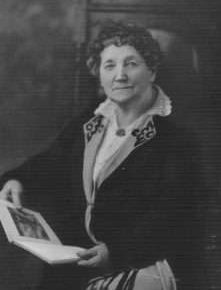
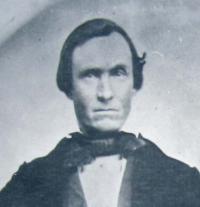
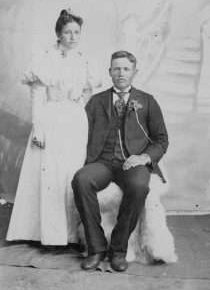
Sanford Bingham, first son of Erastus and Lucinda (Gates) Bingham, born in Concord, Essex, Vermont, 3 May 1821. He married (1) Martha Ann Lewis, daughter of Benjamin Franklin and Joanna (Ryon) Lewis and (2) Agnes Ann Fife, daughter of Adam and Ellen (Helen) (Sharp) Fife. Martha Ann, whom he married near Grand Island, Nebraska, 18 July 1847, gave Sanford 15 children; Agnes Ann, whom he married in polygamy in Salt Lake, 10 October 1863, gave him 13.
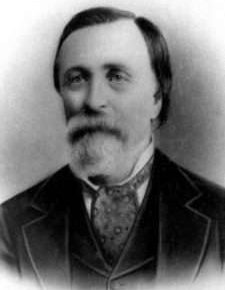
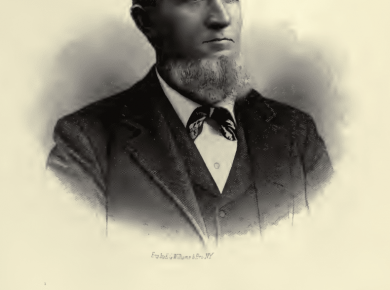
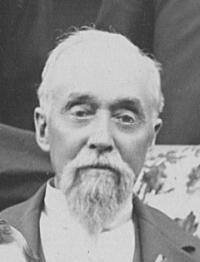
Sanford Bingham, circa 1897
In 1833 at the age of 12, Sanford, along with his parents and siblings, was among the earliest converts to “Mormonism” in Vermont. In 1836, when Sanford was 15, the family began the trek west. They spent the summer near Kirtland, Ohio, then, in the fall, continued to Caldwell County, Missouri. In 1838, after Governor Boggs issued his infamous extermination order, the Bingham’s moved to Hancock County, Illinois. Then, when the exodus from Nauvoo began in the spring of 1846, the family followed the main body of the Church into Iowa and Nebraska (near Omaha), where Sanford’s brothers, Erastus and Thomas, and his brother-in-law, Elijah Norman Freeman, joined the Mormon Battalion. The remainder of the family spent the winter on the Missouri River, 150 miles north of Winter Quarters, then resumed the journey west the following spring. The head of the family, Erastus Bingham, Sr., was captain of 10 wagons in Daniel Spencer’s Hundred. This group, the second company of pioneers to leave the staging area at Elkhorn, started across the plains in June of 1847.
Sanford was born with clubfeet and lived with this condition until he was 24 years old when he commenced to have them straightened, and it was two years or more before he could walk without crutches or a cane. For this reason, Sanford, at age 26, made the trip on horseback, driving the loose cattle. Whether before leaving Elkhorn, or shortly after, he was smitten by an orphaned lass of 14, Martha Ann Lewis, whose uncle, Beason Lewis, was a member of Erastus’s Company of 10. Apostle Parley P. Pratt joined the couple in holy matrimony, a little above Grand Island, Nebraska, on July 18, 1847. Their wedding dinner was cooked over the heat of burning buffalo chips, as there was no wood in that part of the country.
The bride and groom completed the journey to Salt Lake on the groom’s horse. Years later, when other young couples planned their honeymoons, Martha Ann spoke of hers, “as a trip of a thousand miles riding behind her husband over mountains, hills, and plains.” From the cattle they herded, Sanford and his bride supplied the company with milk and butter. Martha Ann explained that they put surplus milk and cream in a churn and tied it to the back of a wagon in the morning, before the start of the day’s journey; then, when they camped at night, they had butter ready for their supper. The Bingham’s reached the Great Salt Lake on September 19, 1847. Said William C. Lewis:
“If my memory serves me right, Sanford Bingham and his bride, my sister, Martha, and Thomas Bingham on horses, and my Uncle Beason Lewis, with his team, led the company into the valley.”
The Bingham brothers and others who arrived on September 19 drew lots in the Second Ward. The Bingham lots were situated in the Northeast Block (commonly known as the Gallacher Block). In the spring of 1848 and again in 1849, Sanford and his brother, Thomas, herded cattle for their family and the public into a canyon southwest of the city in what is now known as Bingham Canyon, named for Sanford and his brother, Thomas. Sanford and his wife spent their summers there, in a little cabin at the mouth of the canyon, tending the cattle and horses. (This cabin has been preserved and is now located in Lagoon in Pioneer Village.) They spent their winters in the Second Ward, with John M. Lewis, Martha Ann’s brother.
Though the Bingham’s discovered several rich mineral deposits in the canyon while tending their herds, Brigham Young discouraged prospecting, for fear that significant “finds” would bring on hordes of infidels. Pres. Young also said it wasn’t time to mine the ore because they needed to continue farming and raising stock, for the people were dependent on these industries. The Bingham family obeyed the prophet. Now known chiefly as a source of copper, the main products of Bingham Canyon from 1868 into the 1890’s were gold, silver, and lead.
In July of 1849, Sanford and his family moved back to Salt Lake. The family remained in Salt Lake until April 9, 1850, when they moved to Lynn, or where Ogden is now, their first home located between 22nd St. and 28th St. They raised grain and potatoes here and Sanford also served as a schoolteacher.
In the spring of 1851, they moved northwest about two miles to Bingham Fort to about 2nd St., which later became North Ogden, for protection from the Indians who were on the warpath at that time. While here, they had a farm, part of which was tillable, and the rest was meadowland. Their farm implements were very crude, and they used ox teams in building irrigation ditches to carry water from the Ogden River to their land. While on the farm, they had some sheep and Sanford would clip the wool from the sheep and Martha Ann would wash, cord, spin, and weave the wool yarn into make clothing for the family.
Sanford was prominent in the early history of Weber County for his service as Constable, Justice of the Peace, and School Trustee. In 1856, the county court appointed him Assessor and Tax Collector for Weber County and Ogden City. Money was scarce and some people paid their taxes with gold dust. He always carried small scales for weighing the gold dust. He rode horseback at his work, sometimes being gone from home for a week, and during that time he would collect quite large sums of money. This he carried on his person and always went unarmed, trusting in his Creator for protection. After the railroad came west and much rough element with it, his wives, fearing for his safety, asked him to get a gun. He did so and carried it with him on one trip, but when he returned home, he put the gun away and never took it again. He continued with this office until the end of 1873.
Because Johnston’s Army was coming, the call came in the spring of 1858 for the Saints to move south. The Bingham’s went south and suffered many hardships along with others. Sanford was sent back after grain that had been left in Weber County; however, they were able to return to their home the first part of August.
In 1862, Sanford relocated with his wife and children to Riverdale, Weber, Utah, a few miles south of Ogden. Here, at the age of 42, he took as his second wife, 17-year-old Agnes Ann Fife, whose father, Adam Fife, had served in Riverdale as first president of the branch church. Sanford himself was named President of the Branch in 1868. To their union, 13 children were born.
In 1868-69 Sanford was Deputy U.S. Collector for the Counties of Weber and Box Elder under R. T. Burton as U.S. Collector for Utah Territory. When Sanford was 55 years of age, he was called on an LDS mission to the Southern States where he served from October 1876 to September 1877.
When the Riverdale Ward was organized in 1877, Sanford was named Bishop, an office he held until released, owing to age and infirmities, on 20 January 1902. At that juncture, having been succeeded as Bishop by his son, Adam A., Sanford was ordained a patriarch of the Weber Stake.
The Riverdale Ward in its early days appears to have been something of a domination of Bingham leadership: Sanford’s wife, Martha Ann, was first president of the Relief Society (organized 1872) and the Primary Association (organized 1879); his son- and brother-in-law, Joseph Fife, was first president of the Young Men’s Mutual Improvement Association (organized 1876), and his daughter, Martha Ann (Bingham) Fife, was first president of the Young Ladies Mutual Improvement Association (organized 1879).
In July of 1897, Martha Ann and Sanford celebrated their Golden Wedding Anniversary by having a family reunion at their home in Riverdale. All of their living children were in attendance, also a great number of their grandchildren and friends.
When the Golden Jubilee of the Church of Jesus Christ of Latter-day Saints was held in 1897 in commemoration of the arrival of the saints in the valley of the Great Salt Lake, both Sanford and Martha Ann, along with other pioneers of 1847, were guests of honor. Every pioneer who arrived in that year was presented with a beautiful gold pin called a Jubilee Badge with their names inscribed.
Sanford lived a good, long, and useful life leaving this earth at the age of 89-1/2 years with a strong testimony of the Gospel of Jesus Christ on November 21, 1910, in Riverdale, Weber, Utah.
This article originally appeared in Vol.60 No. 2 of Pioneer Magazine by Ronald W. Andersen The Fentons rented part of a house in the Fifteenth Ward, but in 1852 they…
This article originally appeared in Vol.62, No.1 (2015) of Pioneer Magazine. by Pioneer Magazine The following excerpts appeared in the March 1930 issue of the Instructor and were taken from…
One day she said “If you will have Amos Cox administer to me I think I will get well.” Father was only 17 years old at the time and had never administered to anyone in his life, but they sent for him out in the field where he was scything grain. He said he was dumb founded, but told them he would come. There in the field he asked Heavenly Father what to say and said he believed it was one of the most humbling experiences of his life. He went to the house, washed his hands, and sealed the anointing. He promised the girl that she would get well, then when he looked at her and saw how frail and pale she looked, he was scared and so weak that he sat down.
At the time there were no free schools held in Utah, so students were required to pay tuition, which was rather difficult to provide; while attending with Peck, my tuition became considerable in arrears, therefore, he proposed that I assist him with classes at a salary of $1.00 per week and my tuition, (in all about $1.35 per week) the $1.00 per week to apply on deferred payments.I engaged to teach the Hoytsville School early in January 1876, at a salary of $45 per month. The school house consisted of one log room about 30 by 40 feet, heated by a stove in the center. The teacher was also the janitor etc.
The first three nights on the trail were spent on the banks of the Elkhorn River, which was not far out of Winter Quarters. The river had many fish in it and some of the company fished a good deal while camped at that location. Others spent time harvesting grapes which were in abundance along the banks of the river. The company saw many buffalo herds and abundant antelope, deer, and elk along the trail. They only harvested one buffalo, but had many deer and antelope along the way. This journey was made before the white man exterminated the buffalo by shooting thousands and then leaving the carcasses to waste.This was not the end of the influence of the white man. Henry John documented the following: “The horse and the cow were soon to take the place of the buffalo; sheep were to replace the elk, deer and antelope. Domestic fowl claimed the place of the wild turkey; grouse and little prairie dogs were given wheat saturated with poison in order to move them out of the way so fields of grain could be raised. Wild plums and bending branches of wild fruit were to be rooted up and the more luscious fruits- peaches, pears, apples and others- were to take their place. The Indian wigwams were to be moved; white man’s cottages and beautiful residences were to take their places (2).” Henry Miller had a very stern reputation and lived up to that reputation on this journey as well. When the company came to the Green River, Captain Miller told them all to get out of the wagons and ford the stream on foot. The river was ice cold and one old man that had been very sick and worn out climbed on a mess box that was bolted on the back of a wagon. When Captain Miller saw this, he jumped into the river and pulled the old man off and threw him into the cold river. Twenty eight people died on the trip and many thought a good portion of those fatalities were attributable to Captain Miller’s harsh, unforgiving supervision
John S. Gleason did indeed own the Mountain Lion mine, or parts there-of, but also the Blue Wing mine listed above and much to our surprise, at least seventeen other lodes shown in Figure 13.0. Two miles north of Ophir is Jacobs City in Dry Canyon. Some of the richest lodes of the Ophir Mining District came from this location. John S. Gleason owned in part the Iris(Ira) and Jacobs Hill lodes (Shoo Fly) in Dry Canyon. Millions of dollars of rich metals were taken from the Ophir and Jacobs City locations. The date of sale of the Mountain Lion Lode no. 2 was 4 March 1871. It was sold with the webster and women rights lodes for $2,000 dollars. The Mountain Lion Lode and thirteen other lodes were sold on 10 June 1871 for the combined sum of$5,000 dollars.
Combined with the guarding that was surely required of Moses, we also learn from George Thomson’s biography that “Moses pushed and pulled on a handcart with a sick man in it for many days. Their rations got slimmer . . . When they got to the Sweetwater [River] near Devil’s Gate, Moses died with seven others the same night. . . . they were buried in shallow graves and covered with snow. This tragedy was a terrible blow to George and he did not get over it for years.”
One Sunday night when Joseph was seven years old his father, William, offered to stay home with the children while his wife, Susanna, attended church meetings. While she was gone William packed his clothes and other belongings. Early the next morning he left home never to see the family again.
Submitted by Hank West, as student at Heritage Elementary School in St. George, Utah. The Reber family came to this country from Switzerland. They lived on farms in the mountains…
One of the first missionaries of the Restoration The earliest missionary of the Church to publicly teach about the Book of Mormon may very well have been Solomon Chamberlain. Even…
Raised in Gunnison, UT; Mid-wife for over fifty births; Husband left on a mission only one week after being married; worked in the Manti Temple to support husband; early day Wyoming Pioneer.
This story is told by Edith Alice Hinton Gibson and Wilhelmina B. Hinton. They were respectively John Nock’s daughter and daughter-in-law, and had 1st hand knowledge of him. This short history is located in the Archives and Special Collections area of the library at Utah State University in Logan, Cache, Utah.
Daniel Rapalyea Allen operated flour mills in Flushing, New York, St. Louis, Kanesville and Perryville, Iowa, West Jordan, American Fork Canyon along with a saw mill, and American Fork City (600 North 150 East, just south of current Star Mill). The mills in the latter two locations were owned by him. Following several floods which destroyed the canyon mills and associated bridges, he returned to West Jordan.
This article originally appeared in Vol.51, No.4 (2004) of Pioneer Magazine. by Mary A. Johnson, President, International Society Daughters of Utah Pioneers It was in 1954 when I first became…
Taken from Orson Whitney’s History of Utah, Vol. 4 THIS worthy pair, the prolific though now aged parents of a numerous flock of children, grandchildren, and great-grandchildren, about one hundred…
 0
0
 1
1



 Brother Joseph