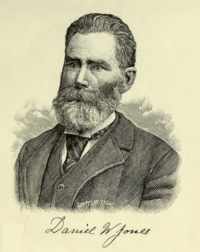
JONES, Daniel Webster

0 1
Read Time:2 Minute, 38 Second
This article originally appeared in Vol.60, No.1 2013 issue of Pioneer Magazine

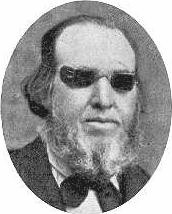
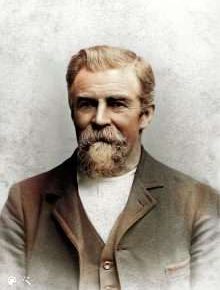
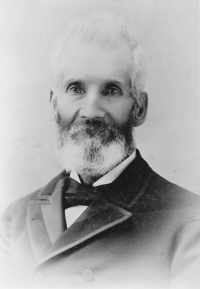
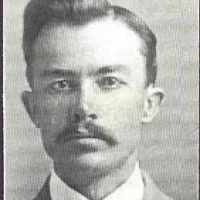
Daniel Webster Jones was born August 26th, 1830, in Booneslick, Howard County, Missouri. Orphaned at the age of 12, he joined a group of volunteers to fight in the Mexican-American War in 1847.

While camped along the Green River in 1850, his pistol went off in his holster, piercing through 14 inches of his groin and thigh. His companions left him, lame, but alive, with a Mormon settlement in Provo. There, he studied Mormon doctrine and was baptized by Isaac Morley on January 27th, 1851.1 The next year he married Harriet Emily Colton, daughter of Philander and Polly Colton.

In the October 1856 general conference Brigham Young informed those gathered that a group of Latter-day Saint immigrants were stranded on the plains of Wyoming. These were the Martin and Willie handcart companies, as well as the Hunt and Hodgett wagon companies. The next day, about 25 men departed from the Salt Lake Valley to find the immigrants.

The company found the Willie Handcart Company near South Pass. After reaching Devil’s Gate, they still hadn’t found the other groups, and Jones, Joseph A. Young and Abe Garr were sent ahead to find the missing parties and help them in to the Devil’s Gate area. After assisting them to a spot now known as Martin’s Cove, it was determined that Jones, Thomas Alexander and Ben Hampton would remain behind with the goods cached at Fort Seminoe, together with 17 teamsters detailed from the Hunt and Hodgett wagon companies.

During that winter they endured terrific privations, which Jones later detailed in his autobiography.

In 1874, Jones was commissioned by Brigham Young to translate selections from The Book of Mormon into Spanish in preparation for a missionary expedition into Mexico. This he did, with the assistance of Henry Brizzee and Milton Trejo, a recent Spanish convert from the Philippines. Following the translation, the company, including James Z. Stewart, Helaman Pratt (son of Parley P. Pratt and father of Rey L. Pratt), Wiley C. Jones (Jones’s son), R. H. Smith, Ammon M. Tenney and Anthony W. Ivins (who would later become an Apostle and First Counselor in the First Presidency) departed for Mexico. The mission lasted from 1875 to 1876.

Upon returning, Jones was commissioned by Brigham Young to start a settlement in the Salt River Valley of Arizona. Originally called Jonesville, the settlement was later renamed Lehi and was eventually incorporated into Mesa, Arizona.

After some conflict with the other settlers, Jones moved to the Tonto Basin area, where his wife and youngest child were killed when a shed fell on them during a storm in 1882. In 1890 he published his autobiography, Forty Years Among the Indians. He died on April 20th, 1915, of gangrene after an accident and was buried in the Mesa City Cemetery.2 He was 84 years old.


Excerpts from “Daniel Webster Jones (Mormon),” Wikipedia, www.wikipedia.org

1 Daniel W. Jones, Forty Years Among the Indians, 1890.

2 Jim Walsh, “Mesa Cemetery preserves history one plot at a time,” Arizona Republic (October 5, 2010).

Happy
Happy
0 %
Sad
Sad
0 %
Excited
Excited
0 %
Sleepy
Sleepy
0 %
Angry
Angry
0 %
Surprise
Surprise
100 %
You May Also Like

ANDERSON, Editha Morgan

Whatever else she was, Edith, like many other mature single Latter-day Saint Women, had internal strength and strong religious beliefs sufficient to tolerate an environment that was unsympathetic toward mature single women, as exemplified by Stout’s comments.Editha established a private school in her small log cabin that was located on 1st North and about 70 West in American Fork. It served as a bedroom, living room, and a tightly packed class room. The dwelling featured one door, one window, two beds, a wood stove, and a rest facility located out back of the cabin. Her rudimentary school attracted a dozen or so students, about the same number of youngsters as attended another school that met in a community-owned building that served as a place of worship and education.
View Post

Richard Alldridge

He was evidently very happy in his work because he sang at it, wrote songs and occupied his mind and hands at the same time. His songs were songs of praise and thankfulness to his Heavenly Father for the many blessings received, and the knowledge he had of the true Church.
View Post

TWITCHELL, Ephraim & Phoebe Melissa Knight

One day Branch President Ephraim Twitchell was traveling from Sacramento a long way by wagon. The last day of his journey he was traveling late, after dark. He did not stop because he was almost home. He was alone in his wagon, when suddenly there was a man sitting beside him on the spring seat. He just appeared from nowhere. He told Ephraim that he should take his family from San Juan Bautista and go to San Bernardino. Ephraim responded that they had not been in San Juan very long and that his children had their friends there. He noted that he did not think he could get them to go with him. The man beside him replied, "Yes, you can, and you must go to San Bernardino or you will lose them." When Ephraim turned to answer him he was not there. He had disappeared just as he had appeared -it seemed like just out of thin air. Ephraim knew the gospel very well and remembered their story in the Book of Mormon about the three Nephites. He thought this must be the answer-the messenger was one of the three Nephites. He then saw a beautiful new coat that the messenger had left on the spring-seat beside him. He thought the messenger had really been there-that he had not just imagined or fantasized. Ephraim went home and told his wife, Melissa. They talked about the move. They prayed about it for a couple of days. They knew they must go to San Bernardino, California. Every one of their children and one nephew, John Newton Twitchell, the oldest son of Jasper Twitchell went with them. Anciel Ephraim's oldest son came a year later.
View Post

JACKSON, Elizabeth Horrocks: Handcart Pioneer of 1856

“It will be readily perceived that under such adverse circumstances I had become despondent. I was six or seven thousand miles from my native land, in a wild, rocky, mountain country, in a destitute condition, the ground covered with snow, the waters covered with ice, and I with three fatherless children with scarcely nothing to protect them from the merciless storms. When I retired to bed that night, being the 27th of October, I had a stunning revelation. In my dream, my husband stood by me and said, 'Cheer up, Elizabeth, deliverance is at hand'. The dream was fulfilled.”
View Post