 0
0
 1
1

(1830-1903)
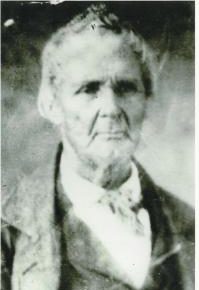
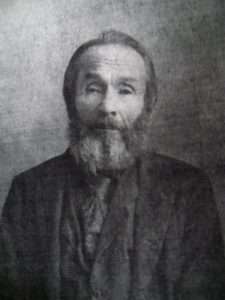
Stephen Winegar was born on March 23, 1830 at Onondaga County, New York, to Samuel Thomas Winegar and his wife, Rhoda E. Cummins Winegar. The family came west through Ohio and being at Nauvoo for a time before Stephen and one of his brothers, Alvin, came to Utah about 1848. He married Lois Smith on August 1, 1850. He was a tall, slim man with light complexion. He had asthma quite badly.</span>
They lived in a small log house in Salt Lake City until about 1871. While they were there, he worked on the building of the temple and tabernacle. He cut and hauled the big posts that hold up the balcony in the tabernacle. Their children were born while they lived in the Salt Lake area.
In 1871-72 they moved to Randolph, Utah, where he ranched and raised cattle. They then decided they needed more land as his sons became grown, so in June 1879, he loaded his mowing machine and hay rake in his wagon and with his three oldest sons and several other men, they traveled north looking for a place to build their homes. They arrived on the north side of the North Fork of the Snake River at what became known as Egin Bench in July and decided that this was what they had been looking for. They started to build houses and they put up about 150 tons of wild hay.
After completing a two-room house, the boys went back to Utah and brought their mother and younger brothers to Idaho. Louisa had married and Elnora remained in Utah with her. They had good weather most of the trip, leaving on October 25, 1879 and arriving just about the time that the winter snows came. The youngest son, Willis, told in his diary that they camped last night on the south fork of the Snake River. It was very cold and too late to ford that night. The next day, William Broadhurst rode his horse across before they tried the wagons. The water came way up on the wagon boxes, but they crossed safely and arrived about four that afternoon at the North Fork where Stephen was waiting for his family.
The winter was very cold that year and the river froze up with ice and flooded the other two cabins that had been built near the Winegar cabin by the John Powell family and a group of bachelors. They had to move in with the Winegars for part of the winter. The next year, Stephen moved his home onto the bench where he homesteaded. A few acres of that ground still belong to his great grandson, Vern Winegar. The house was the first one on the bench, had two rooms each about 16 by 20 feet, was built of quaking aspen, had a dirt floor, dirt roof and a fireplace.
Stephen Winegar and his family helped in the development of the Egin Bench community. The first Sunday School was held in their home and they had the first post office there. He also operated a small store from his home for a time. They erected a building on his farm to be used as a schoolhouse, dance hall and for church and meeting purposes. It burned down after a few years. Stephen Winegar died February 8, 1903 during the cold of winter on Egin Bench. He had taught his sons early in their youth to protect themselves from the wild and his sons were well known as guides throughout the area and did a lot of hunting, trapping and exploring in the region, even into Wyoming and Montana. They were lovers of the out of doors and they used these abilities to help provide for their families.
In the early 1880’s, they entered the large basin across the Idaho border located below the South boundary of Yellowstone National Park, which became known as Winegar ‘s Hole. In 1984 the area called Winegar Hole was designated as Wilderness Area and was named the Winegar Hole Wilderness. It is 10,715 acres of prime grizzly bear habitat located in the state of Wyoming, and is within Caribou-Targhee National Forest.2 The Fremont County (Idaho) history says: “The Egin Bench was the first settlement and began when Stephen Winegar and his four sons, George, Willis, Leonard and John, put up the first log shelter during the summer of 1879 when they cut and stacked the wild hay in the river bottoms. “Winegar Hole” and “Gideon Winegar June, 1882 “carved on the cliff beside the Snake River, are reminders of these early settlers.” (The cliff is near the confluence of Warm River and the Henry’s Fork of the Snake River)
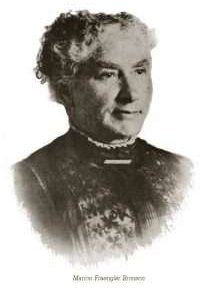
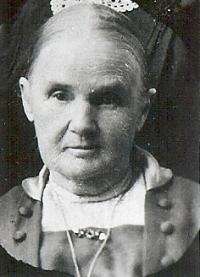
Stephen’s wife, Lois Smith was born October 4, 1833 to John Benjamin Smith and Jane Young in West Whitby, Ontario, Canada. Her family went to Nauvoo when she was four years old. In 1840, her father, mother and brothers George, James, William and sister Cynthia Jane all died with Cholera. A baby sister Emaline lived about a year and then died also, leaving Lois alone. She lived in the home of the Prophet Joseph Smith. She came to Utah when she was sixteen, where she also lived in President Brigham Young’s home until she married Stephen Winegar. She was a small woman, with dark eyes and hair. She was a hard worker and a good cook. She served as a midwife many times after they came to Idaho to Egin Bench, where she was the second white woman to live north of the river. She went day or night to help the sick. She learned the use of herbs from the Indians who became her friends. She made buckskin coats for her sons and beaded them like the Indians did.
She had tragedy in her life. Her son, Thomas Orlando died at the age of ten years and Leonard Wesley, an older son, was shot accidently when he was 27 years old, leaving a wife and small child. Also her husband Stephen had asthma very bad and could not do very much work. She was left a widow when he died in 1903, and stayed in her home until she passed away September 3, 1916.


 Brother Joseph