WHITING, Alma Snow: My Ancestor

0 1
Read Time:3 Minute, 28 Second

Submitted by Aria Doman, student at Riverside Elementary School in Washington, Utah.

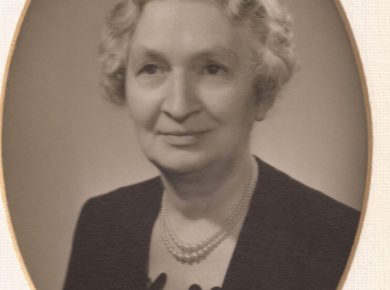
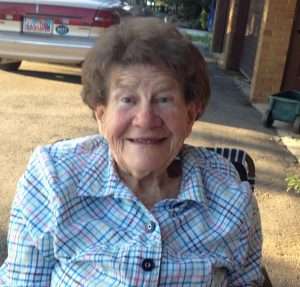
Alma Snow Whiting (1926-2017)

Alma Snow Whiting was my Great Grandma, she died just about a year ago and I miss her so much. It is still weird to think that she is gone. I am writing about her because I want to get to know her better. I have learned so many cool things about her that I wish I would of known before.

She was born just after midnight on the 18th of December 1926. Her grandpa, Dr. Donald A. McGregor delivered her. Her father past away when she was only three and a half, leaving her mother to raise six kids on her own. She grew up in St. George Utah, and loved it here. 

Growing up with five brothers and being the only girl made her quite the tomboy. She loved running, swimming, and playing sports with her brothers. Growing up people always asked her why she had a boy’s name, but it never seemed to bother her. She loved being named after her grandmother. 

Growing up she loved to read Nancy Drew Mysteries. She was baptized a member of the LDS church when she was eight years old in the St. George temple. Ever since she was twelve years old she remembered spending Summers with her aunts and uncles. They were always trying to help her mom out by taking some of the kids. 

Throughout the years her summer jobs included; working as a nanny for her family in California, doing ranch work in Arizona, working at a bakery with her uncle, picking fruit at a fruit farm, and working as a waitress at Grand Canyon North Rim Lodge. She enjoyed those summers spending time with family.

In 1945 Alma enrolled in BYU. It was there that she met Juan Whiting and fell in love. He had just returned from serving in the Navy, and was going to be leaving for another 2% years to serve an LDS mission. Alma continued her schooling while she waited for him to get back. 

While in college, she played the violin in the symphony. She was Vice President of her sophomore class, and served on the committee that determined and presented the Honor Code to live by at BYU. She finished college with a major in English and a minor in speech and music.

September sixth 1949, she married Juan Whiting in the Salt Lake temple. They quickly started a family, and bought a 30 acre lot in Mapleton. Juan was a school teacher and farmer, while Alma stayed home with their 7 children. They loved to travel and explore the world. Throughout the years they took their family to; Brazil, Peru, Ecuador, Guatemala, Honduras, Zambia, Zimbabwe, South Africa, Namibia, Lesota, Swaziland, Panama, Costa Rica, Grand Cayman Islands, Puerto Rico, Aruba, Jamaica, Mexico, Canada, England, Switzerland, Germany, France, Japan, Tinian, Saipan, Marshall Islands, Guam, Belgian Congo, Northern Rhodesia, Kenya, Tanzania, and China.

Some difficult things that Alma had to go through in her life were when her oldest son was diagnosed with cancer. He became a paraplegic and needed constant care. He died at the age of 19. She also had to take care of her sick inlaws for 2 years in her home until they passed away. Their home caught on fire while they were out of the house, and took months to repair. And later on in life, another one of her sons died from cancer.

She was always serving in the church. She went on two LDS missions with her husband. One to Zimbabwe, and one to Cape Town, South Africa. Her and Juan both worked in the temple. 

She loved having a big family, and enjoyed all of her grandchildren. She was a grandmother to 69, and a great grandma to 110 . I used to love going to her house and visiting with her. She had a fun swing in the backyard, and a jar full of suckers. I will never forget what a wonderful woman she was, and hope that I can be like her someday.


Happy
Happy
0 %
Sad
Sad
0 %
Excited
Excited
0 %
Sleepy
Sleepy
0 %
Angry
Angry
0 %
Surprise
Surprise
100 %
You May Also Like

PORTER, Sanford: A Visionary Man

The last night there came a Voice–clear, audible, and distinct, "There is a God, and He has known the desires of your heart this number of years. I will instruct you three times this night the way that is right- -that you need never again doubt, but shall be satisfied in your mind concerning God.”
View Post

BLANCHARD, Amelia Jane Davis

The Davis family, being among the first settlers to Cache Valley, suffered untold privations and hardships. Amelia remembered the trials they had with the Indians, and how frightened she was. They would come to the door begging for food and no one dared to turn them away. As Ann H. fixed food for them, the Indians would play with the white children. When coming out of the house with food one day, Ann H. discovered the Indians had exposed her children to the black smallpox. The twins soon came down with the illness. The settlers were all so frightened of the deadly disease that a log shelter was hurriedly built a short distance north of the Logan Cemetery. The Davis family, including the stricken twins, moved there in isolation. Amelia told of rats, mice, and snakes so thick that the healthy children took turns with willows, brushing the snakes from the beds of the sick children. Their beds located on the floor were made with a straw tick. The weather was severe coming through the open cracks of the shelter. The family was badly neglected and almost starved to death. Remarkably, the twins recovered from the smallpox epidemic, but after being home only a short time, diphtheria struck, taking the lives of both twins, Henry and Catherine. Childhood days were very strenuous and hard. These early settlers had lots of troubles, yet they had some thrilling and good times too. Amelia often told stories of the exciting sleigh rides, dances and house parties they enjoyed. How she loved her church activities! Amelia's greatest desire was to do good for others and scatter sunshine wherever she went.
View Post

FREESTONE, George: and his Wives, Alice Carlisle and Jennie Lind

George found himself, as a fifteen year-old, driving four yoke of oxen on a heavy freight wagon to the Utah Territory. His younger brother, James, later wrote that he had driven sheep 1,000 miles barefooted across the Plains. “In Alpine,” George wrote, “between 1855 and 1856, I spent about half of my time building forts to fight against the Indians and half my time killing crickets.” The family struggled against these odds to make a living. Then in 1858, they lost their father when he was killed by Indians.
View Post

PETERSON, Charles Sreeve

Mr. Powell, tried to persuade him to give up his faith or otherwise he would have to surrender his work position. He flatly told him no, as to deny his knowledge that he had received would be the greater sin. In his words, “I knew it would be a great sacrifice to me to give up my employment and the comfortable home which I appreciated so much, but to give up the principles which I had received and which I knew to be true would be a far greater sacrifice, and of the two I would choose the lesser … no position, wealth or earthly honor could move me from my convictions and purposes at that time…”
View Post

CHAPMAN, Julia Ann

With the coming of spring, the brethren made a concerted drive to get all the Saints out of Kanesville. Other than for Julia’s health, Isaac was well equipped to travel. In the heat of the late spring, Julia gained some weight and felt pretty well. Deciding that they could safely make the trip, Isaac loaded the wagon
View Post

HIGGINS, Nelson: Through it All

Prior to leaving Nauvoo, Daniel Allen, Nelson Higgins, and Samuel Shepherd were called as a committee to sell properties belonging to the saints in the Bear Creek area. They were successful in collecting a good deal of money for the saints, but when they returned, the mobs had hit Nauvoo and the exodus had already begun (4). This is the first thread we find that ties the families of Nelson Higgins and Daniel Allen in their dedicated struggle for survival. Their relationship must have been a close one because Daniel’s daughter, Diantha, married Nelson’s son, Alfred. We know Daniel was one of the last three families to leave Nauvoo, so there is a good possibility that the other two wagons were those of Nelson & Samuel. Also, Daniel went to Manti to set up a tannery in 1854, and the two children were married in 1858, so their friendship must have lasted a lifetime.
View Post

ALLEN, Albern

A court-martial was held by the officers and priests, and without being heard in their own defense, the brethren were sentenced to be shot on Friday morning on the public square in Far West, in the presence of their wives and families. At this unprecedented action General Doniphan objected, saying he would have nothing to do with such cold-blooded actions, and he would draw off his brigade from the army. This probably saved the lives of the prisoners, as the sentence was changed and the prisoners were taken to Independence, Jackson County (3).”
View Post

HURST, Philip: Letter on Indian affairs in Sanpete County to the Salt Lake Herald

If government wants to know if there has been any Indian trouble here, let men be sent here to inquire; talk to the widows of Jens Larsen and David Jones, the widowed mothers of Thomas Jones and Nathan Stewart; visit the graves of the entire Given family; talk to the men who have rode night and day for hundreds of miles, trying to bring these marauders to Justice;
View Post